
Sleeping Pills: Is it Safe in the Short and Long Run?

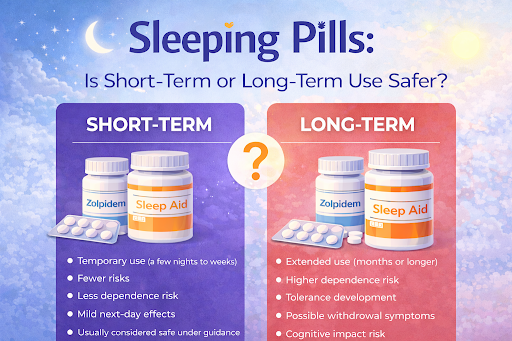
Sleep is necessary to physical recovery, emotional stability, cognitive ability, and health. However, millions of individuals have problems with drowsiness or broken sleep. Doctors can prescribe sleeping pills when lifestyle modification and good sleep hygiene fails. A question is frequently asked:
Can sleeping pills be taken both in the long run and short run?
The solution will depend on the type of medication, the cause of insomnia and its mode of use. This guide is used to describe the difference between short-term and long-term sleeping drugs, their safety profiles, risks, and how physicians make decisions on the optimal plan.
Understanding Insomnia
We should discuss insomnia first before we discuss the drugs.
Insomnia can be:
– Acute (short-term) -lasting a few days to a few weeks.
– Chronic (long-term) -no less than three nights per week and no less than three months or longer.
Common causes include:
- Stress or anxiety
- travel/schedule changes
- Medical
- chronic pain
- mental health issues
- bad sleeping.
The therapy is based on insomnia nature and duration.
What Are Short-term Sleeping Pills?
Temporary disturbances get you to sleep or keep you asleep with the help of short-term pills.
They are usually prescribed as treatment of:
– Sleep disorders associated with traveling (jet lag)
– Short-term stress
– Temporary life events
– Situational anxiety
– Sleep disorder after surgery.
Most Oral Contraceptives and Other Short-Term Drugs.
– Zolpidem (Ambien)
– Some benzodiazepines (under certain circumstances)
– Non-benzodiazepine hypnotics (Z-drugs)
Features:
– Act quickly
– Short half-life
– To be used on a limited basis (2 to 4 weeks)
Benefits
Short-term pills when used as instructed can:
– Sleep during stressful times.
– Prevent exacerbation of health by sleep deprivation.
– Enhance mood and functioning (daytime)
– Assist in overcoming temporary pauses.
Physicians will tend to prescribe the minimum dose over the shortest period of time.
Risks
Some risks are involved even in the case of short-term use:
– Next-day drowsiness
– Dizziness
– Memory problems
– Rare sleep behaviors
– Possible addiction on abuse.
They are not administered to treat chronically due to these risks.
Introduction to Long-Term Sleeping Pills
Some long-term pills may be prescribed to treat chronic insomnia, but very few of them are supposed to be used indefinitely.
Doctors usually add in chronic cases:
Cognitive Behavioral Therapy-Insomnia, also known as CBT-I, is a psychological method used to treat insomnia in children and adolescents.
– Cognitive Behavioral Therapy-Insomnia or CBT-I, is a psychological intervention that is applied in the treatment of insomnia in children and adolescents.
– Lifestyle changes
– Vigilantly attended to medication.
Certain drugs can be taken longer with the supervision, however, it is necessary to reassess them regularly.
The reasons why Long-Term Use Should Be Cautioned
Extended use can lead to:
– Tolerance – the body gets used to it and loses its effectiveness.
– Dependence – sudden withdrawal can result in rebound insomnia.
– Disturbed quality of sleep – there are drugs which interfere with the normal sleep patterns.
– Cognitive side effects – the long-term sedatives may affect memory and concentration.
Due to these fears, physicians consider the pros and cons before prescribing the use of the same in the long term.
The differences between short-term and long-term are the ones that matter.
| Feature | Short-Term Use | Long-Term Use |
| Duration | Days to weeks | Months (if monitored) |
| Goal | Temporary relief | Chronic symptom management |
| Risk of dependence | Lower (if limited) | Higher |
| Monitoring | Basic | Regular follow-up needed |
The difference is in the intention and medical supervision.
When Sleeping Pills are the Right Thing to Have?
Prescription of sleep medication by nurses may occur due to:
– Sleeplessness has severe effects on day to day functioning.
– Non-pharmacological interventions have not helped.
– Anxiety or depression is aggravated by loss of sleep.
– Health complications interfere with sleep.
However, medication is rarely the only solution.
Non-Medication Treatments for Chronic Insomnia
In the case of long-term issues, professionals tend to prescribe:
– CBT‑I
– Consistent sleep schedule
– Reducing screen time just before sleeping.
– Reducing caffeine
– Methods of managing stress.
– Regular exercise
These are long-term strategies that enhance long-term results minus the dependency threats.
Can Anxiety and Pain Impact Sleep Medication?
Yes. Insomnia often overlaps with
– Anxiety disorders
– Chronic pain
– Depression
Sleep can be treated by treating the underlying condition.
Examples:
– The anxiety management minimizes the nighttime racing thoughts.
– Night time pain is reduced with good pain management.
Physicians can organize the treatment programs to manage all the contributing factors.
Safe Use Guidelines for Sleeping Pills
– To minimize risks:
– Take only as prescribed.
– No alcohol or other tranquilizers without medical permission.
– Do not raise the dose without consulting a doctor.
– Do not drive or use heavy machinery until you are aware of the impact of the medication on you.
– Do not immediately discontinue, go to your doctor.
The responsible use will vastly limit complications.
Who Should not Take Sleeping Pills?
Extra caution is needed for:
– Elderly (high risk of falls)
– Patients who have a substance use history.
– Individuals who have problems with breathing.
– Breastfeeding or pregnant women.
The assessment of individual risk factors should always be carried out by a healthcare provider.
The Role of Regular Medical Review
When patients take sleep medication not on a short-term basis, the doctor normally:
– Monitor effectiveness
– Evaluate side effects
– Assess dependence risk
– Adjust dosage if needed
Sleep therapy is an active process, which is to be checked.
Final Medical Perspective
When taken adequately, sleeping pills can be very effective.
When used responsibly, short-term use is generally safe.
Close monitoring should be trained to ensure increased risks with long-term use.
It is not for someone to be dependent on medication forever but to recover the healthy sleeping patterns by means of a balanced approach.
Looking for Trusted Sleep Support Options?
If your healthcare provider has recommended sleep medication, choosing a reliable and discreet source is essential.
At MedsNextDoor, you’ll find:
✔️ Quality-checked sleep medications
✔️ Secure and private ordering
✔️ Discreet delivery
✔️ Support to help you choose responsibly
Medical Disclaimer
This information is informational and should not substitute the medical opinion. Always discuss the use or change in drugs with a licensed medical practitioner.