Long-Term Effects of Un-treated Anxiety: What does it do when it goes Unattended?

There are a number of adults who experience anxiety over a long period without seeking treatment. They believe that it is just a part of their personalities, a natural consequence of growing old, excessive workload, or daily pressures. People say, I have always been this way or it is stressful. In case anxiety is not treated it may over time damage mental and physical health.
One tendency is observed here in clinical and pharmacy education, anxiety not often remains untreated. It tends to enlarge, affecting sleep, cardiac health, digestion, mood, memory and daily functioning.
This guide tells about the long-term consequences of anxiety in simple, practical terms to adults in the United States of America, between 35 and 80 years. It presents the facts in the field of medicine without exaggeration or scare tactics, pure real-life wisdom.
To begin with,
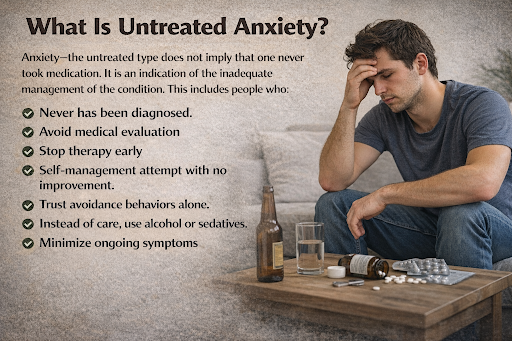
What Is Untreated Anxiety?
Anxiety-the untreated type does not imply that one never took medication. It is an indication of the inadequate management of the condition. This includes people who:
- Never has been diagnosed.
- Avoid medical evaluation
- Stop therapy early
- Self-management attempt with no improvement.
- Trust avoidance behaviors alone.
Instead of care, use alcohol or sedatives.
- Minimize ongoing symptoms
There are clinical standards by different organizations such as the American Psychiatric Association, which view anxiety disorders as something to treat as opposed to accepting them.
The Nervous System is still in Stress
Anxiety is emotional and biological. Constant anxiety maintains the stress response system on. With time the body repetitively emits:
- Adrenaline
- Cortisol
- Stress neurotransmitters
When this is persistent over months or years, then the body does not completely ever drop to a relaxed ground. Activation of stress in the long term can focus on:
- Heart‑rate regulation
- Blood pressure
- Inflammation levels
- Immune balance
- Sleep cycles
- Muscle tension
That is why untreated anxiety can be passed over to the entire body and not the mind alone.
Damage to Sleep is Time Worn
One of the most lasting and the first effects of untreated anxiety is sleep disturbance. It frequently leads to:
- Trouble falling asleep
- Frequent night awakenings
- Light, unrefreshing sleep
- Early morning awakenings
- Racing thoughts at bedtime
The lack of sleep exacerbates anxiety and forms a feedback mechanism. Persistent sleeping disorder increases the risk of:
- Memory decline
- Mood instability
- Reduced immune function
- Elevated blood pressure
- Blood‑sugar dysregulation
Most adults do not treat the anxiety behind the sleep symptoms but only the sleep symptoms and this inhibits progress.
Greater Depression Threat
The occurrence of depression is highly likely when it is accompanied by long-term anxiety. This occurs because:
- Emotional resources are drained away by constant stress.
- Avoidance prevents the reward of activities.
Loss of sleep impairs mood regulation.
Hopelessness is a product of years spent struggling
It is common in cases where the patient might have initially sought assistance to help with depression only to find out that the former was caused by anxiety. In the coexistence of both anxiety and depression, treatment can be more time-consuming but as is always the case, it is successful upon good management.
Cardiovascular Strain
The heart and the vascular system are constantly put under stress by chronic anxiety. Over time, it can lead to:
- Higher resting heart rate
- Elevated blood pressure
- Greater vascular tension
- Decreased heart-rate variability.
The National Institutes of Health reports that in combination with poor sleep and inactivity, chronic stress and anxiety are associated with increased cardiovascular risks. Anxiety is not a guarantee that one will develop heart disease, though; it contributes to the general risk.
Digestive and Gut Problems
The brain and the gut interact through the gut-brain axis. This conversation is interfered with by chronic anxiety, and the end result of this process will be long-term digestive responses including:
- Irritable bowel symptoms
- Chronic stomach discomfort
- Acid reflux
- Appetite changes
- Nausea patterns
- Bloating
- Bowel urgency of stress.
Most of the negative test patients later learn that anxiety is a significant causative factor. Anxiety is usually treated, and the negative symptoms of the digestive system are improved, in some cases, drastically.
Muscle Tension and Pain-Chronic
Individuals who are anxious but untreated have their own dose of muscle strain. Most commonly involved areas are:
- Neck
- Shoulders
- Jaw
- Upper back
- Head (tension headaches)
Over years, this can cause:
- Chronic tension headaches
- Jaw‑clenching damage
- Myofascial pain
- Migraines
- Postural strain
Patients would in many cases want to contain the pain but fail to consider the anxiety that is at the base.
Cognitive Effects: Attention, Memory Problems
Prolonged anxiety alters the brain in terms of its attention allocation. The mental resources are diverted to danger-searching instead of storing information as the threat-monitoring system operates continuously. Common mental changes include:
- Reduced concentration
- Forgetfulness
- Mental fatigue
- Decision difficulty
- Retarded processing in stress.
Dementia in adults aged more than 50 years may be of concern to them, yet assessments usually suggest interference due to the anxiety. Anxiety is normally treated and the mental clarity is reinstated.
Shrinking Life Patterns (Avoidance Expansion)
The unchecked anxiety is a common cause of avoidant intentions. Examples:
- Avoiding travel
- Avoiding crowds
- Avoiding driving
- Avoiding social events
- Avoiding medical visits
- Avoiding new situations
Although avoidance offers relief on a short-term basis, it has long-term expenses. With years, life becomes thin, less confident and less dependent upon safe zones. The given trend is typical of the panic-associated and social anxiety disorders.
Risk of Greater Substance Use
Self-medication may be practiced by people when anxiety is not treated. Patterns that are common are greater use of:
- Alcohol
- Sedatives
- Sleep aids
- Cannabis
- Abused Prescription drugs.
Strauss is a short-term relief that may become long term dependence. It is merely a coping mechanism, not a personality issue, but it usually complicates the recovery process and increases the risk of medical complications.
Work and Financial Impact
The performance of the job and financial prosperity is undermined by chronic anxiety in the long run. Consequences may include:
- Reduced productivity
- Missed workdays
- Career avoidance
- Burnout
- Early retirement decisions
- Limited advancement
Experienced adults can perform poorly in comparison with their ability since anxiety that is not treated takes over cognitive and emotional resources.
Relationship Strain
The impact of long-term anxiety on relationships is subtle. Patterns can involve:
- Irritability
- Reassurance seeking
- Overchecking
- Conflict avoidance
- Control behaviors
- Emotional withdrawal
The inner experience may not be understood by the family members resulting in misunderstanding or frustration. Symptom relief in conjunction with relationship quality restoration is often the outcome of treatment.
Increased Medical Utilization
Anxiety patients without treatment tend to take physical symptoms through repeated testing by the medical system. This may include:
Cardiac testing
Neurology visits
GI workups
Repeated lab panels
It should be medically reviewed- however, when anxiety is not addressed, reassurance is not sufficient to prevent recurrence of the symptoms. Combined medical and mental health care is better.
Increased Vulnerability to Secondary Disorders
Anxiety untreated predisposes to development of:
- Panic disorder
- Major depression
- Insomnia disorder
- Substance use disorder
- Somatic symptom disorder
This cascade effect is minimized by early treatment.
Does Untreated Anxiety Just Go Away?
In some cases the mild anxiety may be enhanced with life stress modification. Nevertheless, once clinical anxiety disorders become chronic, the problem is hardly resolved without intervention. The symptoms might change – but the trend will usually stay the same. It is hard to treat late and easy to treat at an early age.
Good News: Effects Can Be Reversed
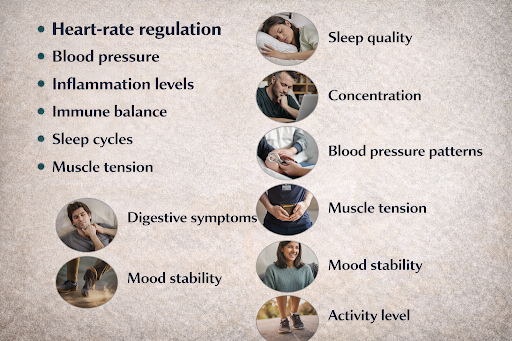
This is significant: a lot of long-term consequences become better in case of an effective treatment of anxiety. Recovery may be observed in the patients in:
- Sleep quality
- Concentration
- Blood pressure patterns
- Muscle tension
- Digestive symptoms
- Mood stability
- Activity level
Even the nervous system is not set in stone at 60 years of age or 70 or even 80.
Indications of When to seek treatment
Take into consideration professional assessment in case anxiety has existed months or years and leads to:
- Sleep problems
- Avoidance behavior
- Physical symptoms
- Work impairment
- Relationship strain
- Heavy reassurance seeking
- Substance reliance
- Ongoing distress
A good beginning point is primary care. Mental health specialists give specialized treatment.
Bottom Line
Background stress is not just anxiety that is untreated. In the long term, it may interfere with sleep, cardiovascular well-being, digestion, mood, cognition, and daily functioning. However, the prognosis is favorable: anxiety disorders are some of the most treatable mental health issues when treated using evidence-based care. Disregarding anxiety allows it to develop. Anxiety treatment is a way of life that allows life to widen.