
How Sleep Deprivation Affects Your Brain and Mental Health

Reference: Mercy Medical Center, 2007.
Dr. Emily Harrison, MD (Internal Medicine) has medically reviewed it.
Last Updated: March 2026
Introduction
Sleep maintains the health of our bodies, sharpness of our mind and even our mood. But several of us just do not rest. According to the Centers of Disease Control and Prevention (CDC) nearly a third of adults do not get enough sleep.
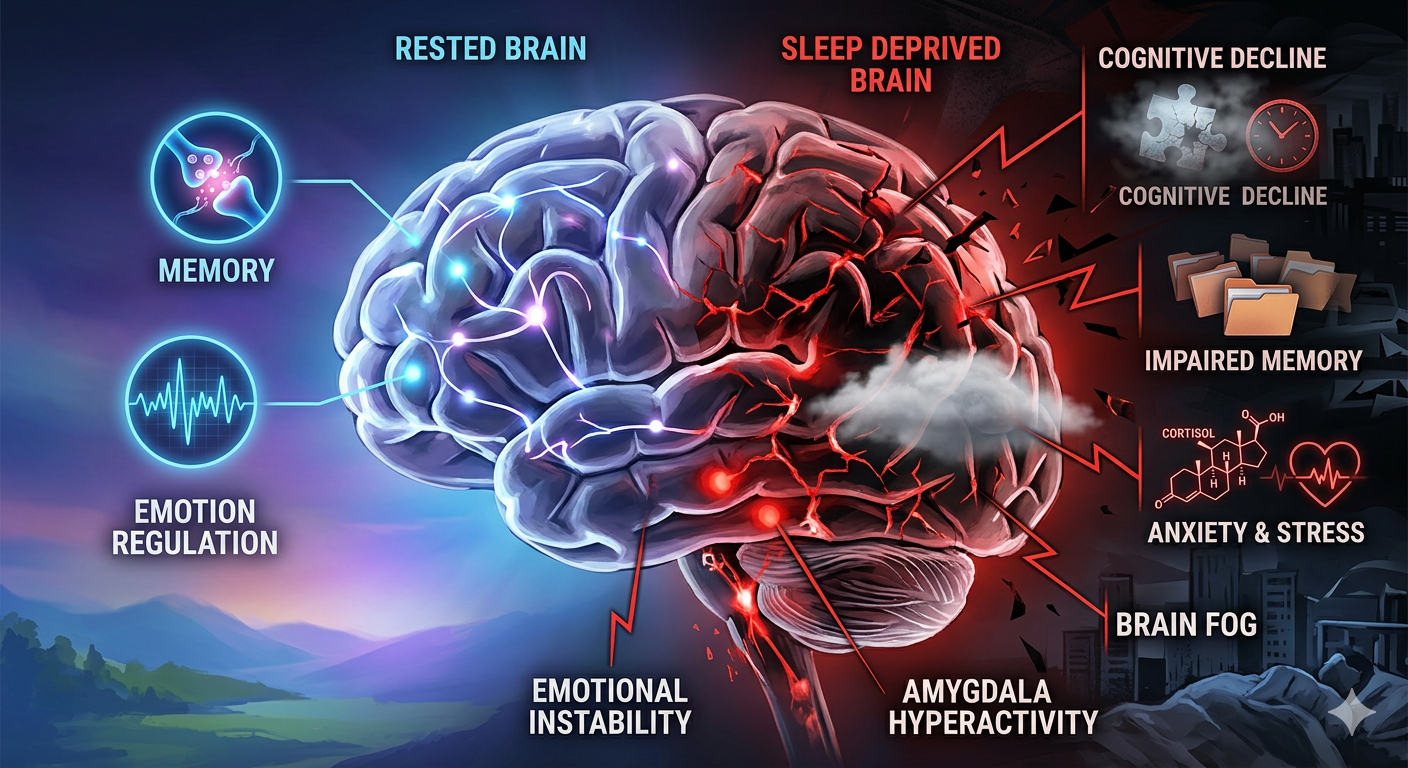
Loss of sleep is not only about feeling fatigued. It may damage the functioning of the brain, lower emotional control, and increase the possibility of anxiety, depression, memory problems, and lowered mental performance.
Learning about the negativity of inadequate sleep may assist individuals in appreciating the importance of healthy sleeping habits and/or consult when encountering problems.
What Is Sleep Deprivation?
Sleep deprivation occurs when you constantly do not get the quantity of sleep that makes you healthy.
The needs also vary among people with an average of 7 to 9 hours a night.
Remember that insomnia may begin to damage brain functions and mood.
Sleep deprivation can be as a result of:
- Insomnia
- Stress or anxiety
- Irregular work schedules
- Excessive screen time
- Medical conditions
In the case of the continued existence of these issues, they may impact the ability and structure of the brain.
How the Brain Uses Sleep
The brain does a number of essential tasks in the course of sleep:
Memory Processing
Sleep transforms short term memories to permanent memories. Deep sleep enhances the neural pathways that are used in learning.
Brain Detoxification
It is during the state of sleep that the glymphatic system is activated and exudes waste products out of brain tissue.
Emotional Regulation
Sleep regulates such neurotransmitters as serotonin and dopamine, which contribute to the stabilization of mood.
These processes become ineffective when interrupted by sleep.
- Awareness Effects of Sleep Deprivation
Lack of sleep might impair brain ability.
- Reduced Concentration
Sleep deprivation is detrimental to concentration and mind. The activities that were initially simple become difficult.
- Slower Reaction Times
Sleep deprivation decreases the processing speed of the brain, increasing the risk of accidents and errors.
- Memory Problems
It has been found that loss of sleep complicates the retention of new information.
- Poor Decision‑Making
Exhaustion undermines the capacity of the brain to make risk judgment and make sound decisions.
Such mental difficulties complicate the everyday life and work.
Emotional and Psychological Impact
Sleep deprivation also unbalances mood and psychology.
Increased Irritability
Individuals with lack of sleep are usually moody and angry.
Higher Stress Levels
It is sleep that controls cortisol, our primary stress hormone. The lack of sleep maintains the cortisol level.
Anxiety and Depression
Individuals who experience chronic insomnia have a high tendency of developing anxiety disorder and depression.
Sleep deprivation may aggravate the negative thinking and emotional responses.
Brain Physical Physical Effects
Sleep deprivation has the ability to alter the appearance and functioning of the brain on a long-term basis.
Reduced Brain Connectivity
The loss of sleep may impair communication between emotional control areas of the brain.
Amplified Amygdala Activities
The amygdala, the fear reactive part, is more receptive when you are sleep deprived.
Decreased Prefrontal Cortex Response
The prefrontal cortex predominate over reasoning and impulse control. Loss of sleep impairs its emotional and decision-making capabilities.
Long‑Term Health Risks
Constant sleep issues are predisposing to most conditions:
- Anxiety disorders
- Depression
- Heart disease
- Diabetes
- Obesity
- Cognitive decline
With time, continuing sleep disorders may reduce life quality.
Improving Sleep Habits
The sleep can be improved by small lifestyle changes.
Keep a regular Routine
Sleeping and rising at the same time every day is favorable to natural circadian rhythm.
Limit Screen Exposure
Reducing the amount of screen time before sleep increases the production of melatonin.
Design a Bedtime Routine
The body can be relaxed by reading or through light meditation or light stretching.
Reduce Caffeine Intake
It is advisable to avoid caffeine towards the end of the day so as not to have it disrupt sleep.
When to Seek Medical Help
Ask a doctor if:
- The problems with sleep persist over several weeks.
- Insomnia has impact on the daily functioning.
- Fatigue feels very severe
Sleep disorders can be discussed with the doctor, and may include behavioral therapy, change in lifestyle, or drugs.
Conclusion
Sleep deprivation does not only cause harm to energy. It impairs brain functioning, disrupts mood and poses severe mental issues. Good sleep habits should be on the agenda of thinking and being healthy in general.
Medical Disclaimer
The article is informational, and should not be taken as professional medical advice. One should never start or switch treatment without consulting a medical expert.