
Benzodiazepines Explained: Benefits, Risks, and Safe Use

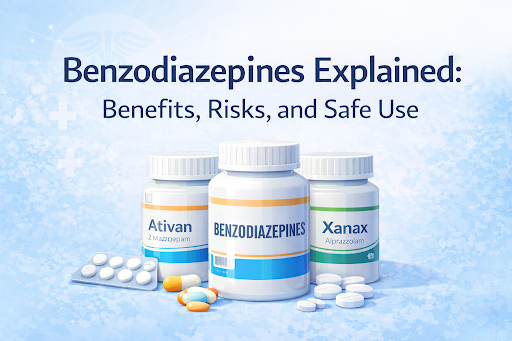
One of the most widespread mental health disorders is the anxiety disorder. To most individuals, anxiety is not just a stress that can be handled every now and again but an issue that begins to disrupt everyday life, sleep, employment and relationships. In severe cases or those symptoms that cannot be controlled, medicine can be prescribed by the doctor as the systematic method of treatment. Benzodiazepines are one of the most widely prescribed classes of medication to use in the short term to relieve anxiety.
This guide provides information about benzodiazepines, their mechanism of action, their effects, possible side effects and the safe usage of these drugs in a supervised medical setting.
What Are Benzodiazepines?
Benzodiazepines are also the medications used to treat central nervous system (CNS) to achieve a calming effect. They are very popular in treating anxiety and panic disorders in the short term and have been in the medical practice decades ago.
The benzodiazepines used as common prescriptions are:
– Lorazepam (Ativan)
– Alprazolam (Xanax)
– Clonazepam
– Diazepam (Valium)
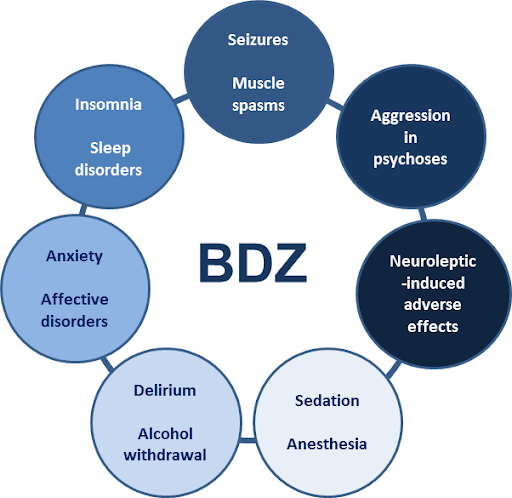
Benzodiazepines may be prescribed to doctors because of:
– Anxiety disorders
– Panic attacks
– Acute stress reactions
– Anxiety-related short-term insomnia.
– Spasms or agitation of the muscles in the medical facility.
These are not medications that are usually aimed at daily long-term use, but they are rather significant in the treatment of acute symptoms.
How Benzodiazepines Work in the Brain
To comprehend the mechanisms of benzodiazepines, it is a good idea to comprehend the functions of GABA (gamma -aminobutyric acid). The neurotransmitter GABA decelerates over stimulated brain activity.
Benzodiazepines:
– Enhance the effect of GABA
– lessen nervous excitation.
– Soothes the nervous system and the brain.
As a result, they help:
– Decrease fear and panic attacks.
– Relax tense muscles
– Decrease restlessness
– Support sedation and relaxation.
Due to this action, benzodiazepines are likely to have an immediate effect and may occur within minutes to an hour.
Benefits of Benzodiazepines
Through proper application and with medical supervision, benzodiazepines can provide a number of advantages.
1.Rapid Anxiety Relief
Benzodiazepines are fast acting as opposed to antidepressants which can take weeks to have an effect. This contributes to them being particularly useful when:
– Panic attacks
– Severe anxiety episodes
– Stresses related to a situation (before medical procedures)
2. Effective for Panic Disorders.
Benzodiazepines may suppress physical and psychological symptoms of panic and they include:
– Racing heart
– Shortness of breath
– Trembling
– Intense fear
3. Short‑Term Symptom Control
Physicians tend to prescribe benzodiazepines as a temporary relief during the time that more lasting interventions (e.g. therapy or antidepressants) are taking effect.
4. Enhanced Sleep in Insomnia Anxiety.
Sometimes when anxiety keeps sleep disturbed and at times, benzodiazepines can be used to soothe the nervous system to such a degree to rest, at least temporarily.
Common Benzodiazepine uses
The benzodiazepines are only prescribed in some specific situations, and not in day-to-day use.
Common scenarios include:
– Acute anxiety episodes
– Panic disorder flare‑ups
– Severe stress reactions
– Anxiety-related short-term sleeping disturbance.
– Medical or surgical anxiety
It is aimed at symptom management, rather than chronic reliance.
Benzodiazepine Side Effects and risks
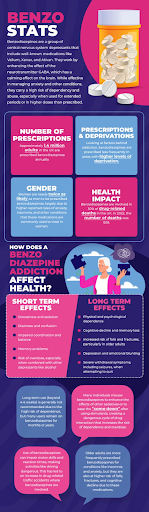
Although benzodiazepines have been proven to be effective, they also entail some dangers as well-particularly when they are not taken in the correct manner or when taken over a long period of time.
Common Side Effects
– Drowsiness
– Dizziness
– Fatigue
– Slowed reaction time
– Difficulty concentrating
These effects can make driving or use of machinery difficult, particularly at the beginning of treatment.
Dependence and Tolerance
Dependence is one of the most critical issues in benzodiazepines.
When used repeatedly or over an extended period of time:
– The body can become tolerant and might need increased doses of the same.
– Physiological dependence can be presented.
– Sudden withdrawal may bring about withdrawal symptoms.
The withdrawal symptoms can be:
– Rebound anxiety
– Insomnia
– Irritability
– Tremors
– Increased heart rate
This is why doctors tend to prescribe a slow reduction in dose (tapering) on the withdrawal of benzodiazepines.
Long-term Use: The Caution of Doctors.
Benzodiazepines are in general not the first line long-term management of anxiety. In the long run, risks can be more than benefits.
Long‑term use may lead to:
– Reduced effectiveness
– Cognitive impairment
– Increased dependence risk
– Problems with discontinuing the drug.
In the case of chronic anxiety disorders, physicians usually recommend:
– Cognitive behavioral therapy (CBT)
– Antidepressant drugs.
– Stress-management and lifestyle interventions.
The benzodiazepines still might be occasionally included in the long-term treatment plans, but with strict attention.
Benzodiazepine Safe Use Guidelines
Taking benzodiazepines safely is only achievable when one strictly follows medical recommendations.
Key Safety Tips:
– Do not exceed the proper dose.
– Do not take on top of the dosage without doctor advice
– Do not overdose without medical consultation.
– Eliminate alcohol and other tranquilizers.
– Do not abruptly quit without medical advice.
– Take as little time as possible.
– Keep away where it won’t be picked up.
Patients should never neglect to report to their doctor about any other medication they are taking because of the potential of unsafe interaction.
To whom should Benzodiazepines be avoided?
Not all patients can react well to benzodiazepines. Additional precautions are needed by persons who:
– History of substance misuse.
– Suffers extremely due to respiratory conditions.
– Pregnant or breast feeding
– Suffers some neurological disorders.
– Fall prone (elderly, as a result)
As a healthcare professional, an individual must always evaluate personal risk factors prior to prescribing.
Because of this, benzodiazepines are often used alongside, not instead of, other treatments.
Benzodiazepines vs Other Anxiety Treatments
Benzodiazepines differ from other anxiety treatments in important ways.
| Treatment Type | Speed of Relief | Long-Term Use |
| Benzodiazepines | Fast | Limited |
| Antidepressants | Slow | Yes |
| Therapy (CBT) | Gradual | Yes |
| Lifestyle changes | Gradual | Yes |
Due to that, benzodiazepines are not used exclusively, they are frequently combined with other treatments.
Final Medical Perspective
Benzodiazepines would still be useful in the treatment of anxiety provided one uses them judiciously. They can best be used in cases of short term relief, crisis management and panic attacks. Nevertheless, they are not an in themselves treatment and must be included in a larger treatment plan.
When taken properly and observed closely, benzodiazepines may assist a patient to recover control at hard times as more permanent solutions are implemented in the long term.
Looking for Reliable Anxiety Medication Options?
If your healthcare provider has recommended anxiety medication, choosing a trusted and discreet source is essential.
At MedsNextDoor, you’ll find:
✔️ Quality-checked anti-anxiety medications
✔️ Secure and private ordering
✔️ Discreet delivery
✔️ Support to help you choose confidently
👉 Explore anti-anxiety medication options and take a confident step toward better mental well-being.
Medical Disclaimer
This information is informative in nature and should not substitute the advice of professionals. Never start or switch a medication unless directed to do so by a licensed medical professional.