
Chronic Pain vs Nerve Pain: How Treatment Approaches Differ

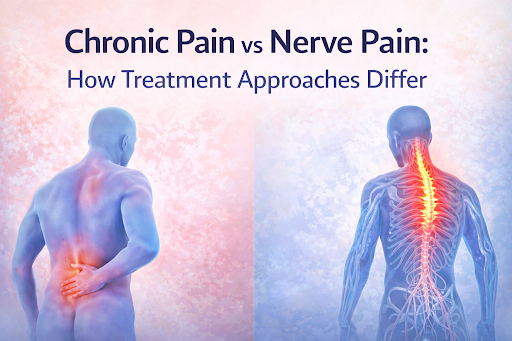
Pain does not have a one size fits all state. Whether it is caused by the same reasons and the most effective treatment depends on the differences between two people who may say the same words to explain pain. Chronic and nerve pain are usually mistaken to be the same, but they differ. To provide care effectively, one needs to understand their differences.
This guide provides information on what is chronic and nerve pain, how it affects the body, why the treatment strategy varies, and how physicians select the appropriate method.
Understanding Pain: More Than Just a Sensation
The body has a system of warning, which is pain. It warns us of injury, inflammation or dysfunction. It becomes an on its own condition and not merely a symptom when it persists or is caused by nerve damage.
Physicians tend to categorize pain as:
– Acute pain
– Chronic pain
– Neuropathic (nerve) pain
Whereas they may be similar, chronic and nerve pain have different responses to treatment and drugs.
What Is Chronic Pain?
Chronic pain refers to pain which persists more than three months after the injury or disease has been cured. It may be permanent or temporary although it persists way beyond the anticipated time of healing.
The most typical causes of chronic pain.
– Lower back pain
– Bone discomfort and joint diseases.
– Long‑term muscle strain
– Post‑surgical pain
– Fibromyalgia
– Headache or migraine symptoms, chronic.
Chronic pain often affects:
– Mobility
– Sleep quality
– Mood and mental health
– Overall quality of life
With time the brain can become more receptive to the signals of pain thus causing the pain to be even stronger than anticipated.
What Is Nerve pain (Neuropathic Pain)?
Nerve pain, or neuropathic pain, is pain in nerves themselves, usually due to malfunction. Nerve pain begins within the nervous system as opposed to pain caused by tissue injury or inflammation.
Common Causes of Nerve Pain
– Diabetic neuropathy
– Sciatica
– Herniated discs
– Spinal cord injuries
– Post‑herpetic neuralgia
– Nerve compression or trauma
The nerve pain is frequently mentioned as:
– Burning
– Tingling
– Shooting
– Electric shock‑like
– Pins-and-needles sensation
This kind of pain may be unforeseen and chronic.
Major Differences between Chronic and Nerve Pain.
| Feature | Chronic Pain | Nerve Pain |
| Duration | Long-term | Long-term |
| Source | Tissue, joints, muscles | Nerve damage |
| Sensation | Aching, throbbing | Burning, shooting |
| Response to painkillers | Variable | Often limited |
| Treatment approach | Broad | Targeted |
Knowledge of such differences can assist physicians in choosing the most effective treatment.
Why Treatment Approaches Differ
Since the mechanisms of chronic and nerve pain are different, they do not react to drugs in the same way.
The Focus of Chronic Pain Treatment.
– Reduce inflammation
– Control muscle or joint pain.
– Enhance operation and movement.
Nerve Pain Treatment Focus
– Acceptance control nerve signal transmission.
– Decrease abnormal nerve discharges.
– Calm the nervous system
The administration of incorrect medication may lead to inadequate pain management and the unnecessary side effect.
Medications Used for Chronic Pain
Physicians can mix interventions with chronic pain, with regard to severity. Common options include:
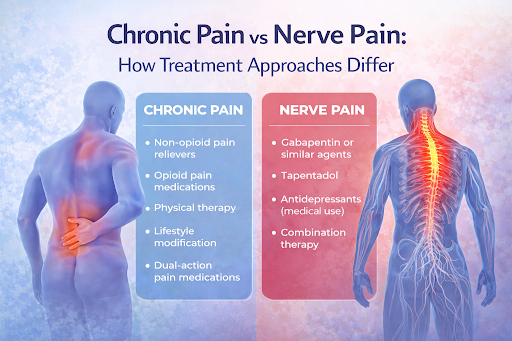
– Non‑opioid pain relievers
– Narcotic or peripheral acting analgesics.
– Muscle relaxants
– Exercise and lifestyle modification.
Drugs like tramadol, tapentadol, or oxycodone can be discussed in case of moderate to severe pain that results in a negative impact on the daily functioning.
Medications Used for Nerve Pain
The pain associated with the nerves may need drugs which influence the nervous system, as opposed to the conventional pain killers. Common options include:
– Tapentadol (dual -action pain reliever)
– Gabapentin or other agents.
– Some antidepressants (in the medical field)
– Combination therapies
Tapentadol is usually a preferred agent of nerve pain since it:
– Reduces pain perception
– Stimulates neurotransmitter systems.
The Role of Dual-Action Pain Medications
There are also pain drugs which help to treat nerve and chronic pain. The effects of these drugs are multi-faceted; thus, they can be used in complex pain conditions.
Advantages of Dual Action Medications.
– Broader pain control
– Minimized necessity of various medicines.
– Improved tolerance of certain patients.
Physicians usually take such options when pain is mixed in nature.
The reason as to why pain can be chronic in some cases.
Pain can be chronicized as a result of:
– Ongoing inflammation
– Poor healing
– Sensitization of the nervous system.
– Psychological stress
When the pain pathways are overstimulated it is possible to continue to experience pain even in the absence of harm. This is the reason why timely and proper treatment is required.
How Doctors Decide on a Pain Management Plan
Physicians consider a number of issues:
– Type of pain (chronic vs nerve)
– Pain severity
– Duration
– Patient medical history
– Past history of treatment response.
– Potential side effects or addiction.
Over time, the treatment plans are usually modified to make them effective and safe.
Non-Medication Approaches That Support Pain Relief
The use of medication is only a subset of a more comprehensive approach to pain management. The supportive strategies are:
– Physical therapy
– Exercise programs
– Stress management
– Sleep improvement
– Lifestyle changes
This can be combined with medication to show better results.
Safety Considerations in Pain Management
In taking prescription pain medication:
– Adhere to dosage directions.
– Avoid mixing with alcohol
– Communicate adverse effects.
– Do not self‑adjust doses
– lowest effective dose should be used.
Sustainable consumption minimizes threats, and it enhances the long-term effects.
When to Seek Medical Advice
Seek medical attention if:
– Pain instead improves even with treatment.
– New symptoms develop
– Side effects are cause of concern.
– Suffering disrupts normal life.
Unmanaged pain may have a massive effect on physical and mental well-being.
Final Medical Perspective
Chronic pain and nerve pain are complicated conditions that cannot be treated using the same methods. To relieve the pain, it is necessary to know its origin. When diagnosed correctly, given special medication and care, most patients will be able to resume comfort, function and quality of life.
Looking for Effective Pain Relief Options?
If your healthcare provider has recommended treatment for chronic or nerve-related pain, choosing a trusted source matters.
At MedsNextDoor, you’ll find:
✔️ Quality-checked pain relief medications
✔️ Secure and discreet ordering
✔️ Reliable delivery
✔️ Support to help you choose confidently
👉 Explore pain relief tablets and take a step toward better pain control today.
Medical Disclaimer
This article is informational only and should not substitute the professional medical advice. It is necessary to consult a licensed healthcare provider before beginning or switching any medicine.