Comparison of Tapentadol vs. Tramadol: Effects, Influence, Benefits, and Safety

Tapentadol plus tramadol are in the same class of pain relievers, but they work differently within the body. When someone has to deal with medium to intense discomfort that is hard to manage, or even when one just wants clarity, one must weigh options between them. At face value, people may view these medications as almost similar.
However, they both impact the manner in which nerve signals deal with pain. They each assist individuals with the exhaustion resulting from chronic pain. In a case where one minimizes how the brain is bombarded hourly with signals, another performs it somewhat differently.
However, tapentadol is not exactly like tramadol; they are not the same at all. The first is stronger. The second works faster most of the time. In addition, the safety concerns between them are not equal. Choosing one means understanding details, not flipping a coin.
This guide breaks things down so ordinary people can understand it-no confusing terms, just straight talk from people who have been there.
How’s tapentadol different?
Tapentadol is a modern pain reliever. It came to rescue people when other opioid medications have lost their effect. Some people find it similar to tramadol because both drugs raise the levels of norepinephrine, which ultimately alters the response of nerves to pain. That subtle brain chemistry adjustment does a better job with sharp, nerve-related pain. However, tapentadol acts more rapidly and harder with its opioid action. This is just what makes it so different from other similar medications.
Tapentadol acts more strongly as an opioid.
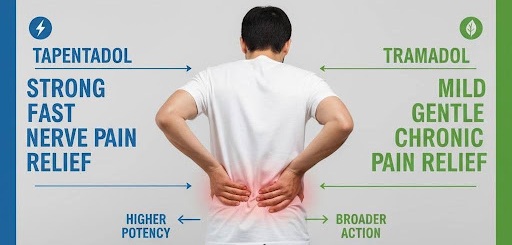
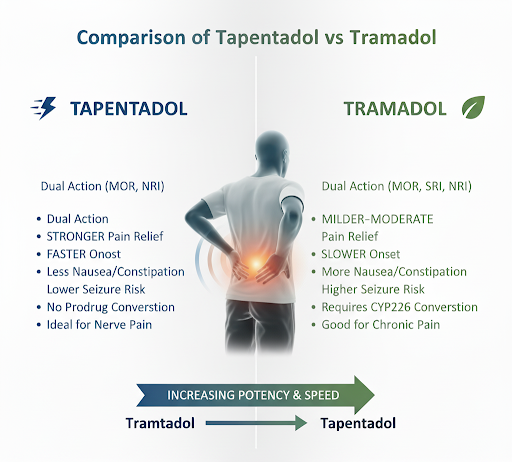
Tramadol’s an opioid-but kind of mild. It exerts its main effect by tweaking serotonin, along with norepinephrine, levels. Tapentadol? That one hits opioid receptors straight-on. Thus, it blocks pain messages way harder.
Tapentadol acts faster.
Many people find relief more quickly. That’s important if one has severe flare-ups, injuries, or aching nerves.
Tapentadol may be helpful for those in whom tramadol has stopped working.
Some people become resistant to tramadol over time-or it simply doesn’t help all that much. That’s when tapentadol comes into play.
What Makes Tramadol Unique?
Tramadol is not as potent as tapentadol. However, it works for day-to-day types of pains. Some people take this medication when they are suffering from chronic back problems, joint issues, or inflamed nerves. Physicians may prefer this option because the opioid component is not that powerful.
Commonly, tramadol mainly acts in two ways.
The opioid effects combined with blocking serotonin and norepinephrine reabsorption-the combination helps ease bodily tightness while calming mental stress associated with discomfort.
Tramadol typically comes into play at the beginning of therapy.
Docs do it gently so that they don’t leap straight into stronger painkillers but rather start slow, keeping things under control without rushing ahead.
Tramadol may affect different people in different ways.
For some, tramadol does not seem to be that effective in pain management because of the way their system metabolizes it. On the other hand, some may experience stronger side effects because their system manages the drug that way.
Which one packs more power? How do they stack up?
Tapentadol is much stronger than tramadol. Physicians report that it may be effective from two up to five times more potent, depending on the dose or individual response. However, that does not make it suitable for everyone; it’s a medicine targeted at those who need tougher relief against their discomfort. Where tramadol covers light to medium ache, this is where tapentadol comes in when the hurt becomes worse.
When tapentadol is indicated
- Pain lasting a long time, messing up your day-to-day stuff
- Pain so bad it ruins your rest
- Nerve pain zaps like a jolt or stings like fire.
- Pain following injuries or surgeries where internal fixations are not successful
When tramadol makes sense
- Constant strain added to joint ache because of conditions like arthritis
- Chronic back pain
- Fewer aches plus less stress when pain sticks around too long
- People who wish to have less contact with opioids
- You pick power depending on what’s needed, instead of what you like.
How each medicine works on pain
Pain is not as simple; the nerves carry the message to the brain, and the brain interprets the message. Tapentadol or tramadol interferes with that chain; yet, each one of these is a little stronger than the other.
Tapentadol mechanisms
- Powerful effect at opioid receptor sites
- A bit more norepinephrine in the system
This combination slows down your pain messages and soothes your nerves.
Mechanism of action of tramadol
- Weak opioid activity
- While increasing serotonin, it also increases norepinephrine.
This dual way of working sets tramadol apart, yet at the same time leads to different reactions from person to person.
The gap counts-tapentadol brings straightforward pain control, while tramadol combines the easing of discomfort with the stabilization of emotions.
Common reactions you might notice. Here’s what could happen
These two drugs have similar reactions because of the comparable areas they hit in the brain, but one hits harder than another.
Tapentadol common side effects
- Nausea
- Drowsiness
- Dizziness
- Headache
- Constipation
That means the results may appear more clearly because it is stronger. Those sensitive to opioids notice it quicker; this means their reaction comes sooner.
Tapentadol serious effects
- Slowed breathing
- Severe drowsiness
- Confusion
- Allergic reactions
They need urgent care immediately.
Tramadol common side effects
- Nausea
- Mild dizziness
- Dry mouth
- Sweating
- Mild drowsiness
Tramadol serious effects
- Seizures
Too much serotonin can happen when certain meds meant for mood issues are mixed.
Breathing problems get worse if mixed with sleepy meds.
Serotonin issues rarely occur with tapentadol. On the other hand, tramadol may cause more problems if you are taking antidepressants.
Addiction and Dependence Risk
One medication may result in dependency, whereas the other does, too; however, tapentadol possesses a more potent opioid action, making it even more susceptible to this condition. Physical dependence: When your system becomes accustomed to a drug, you will experience symptoms after its abrupt discontinuation. Addiction can be distinguished by uncontrollable urges and recurrent consumption in spite of harm. Neither situation warrants self-management; either way, professional intervention plays a paramount role.
- Red flags to watch out for
- Finding yourself wanting a bit more? It might seem like the current amount isn’t enough anymore.
- Restlessness between doses
- Popping pills to feel better inside instead of mending a broken arm.
- Using up medicine before it’s time
- Awareness prevents problems.
Which Works Better for Nerve Pain?
Tapentadol works commonly better for nerve pain due to its combination of potent opioid actions with the blockage of norepinephrine reuptake. Therefore, it can address the likes of nerve damages, post-surgical pains, or even chronic nerve issues. As for Tramadol, it can also be good for nerve pain; however, it is very variable from person to person.
Patients presenting sharp, hot, spreading pain tend to find better relief with tapentadol.
Who Should Not Take Tapentadol
- Tapentadol is not right for everyone.
- People who have problems breathing properly
- Those taking sleeping pills or drinking booze
- People with poorly managed asthma
- People who have used opioids in the past
- People with severe problems of the liver
These risks count.
Who should not take tramadol
- People with epilepsy and other related disorders
- Individuals on medications that alter serotonin levels
- People with serious lung conditions
Every medication has its own specific warnings.
Which one is better for long-term use?
Neither drug is effective for prolonged periods without follow-ups. Nevertheless, some doctors still choose slow-release types when continuous pain relief is necessary.
- Tapentadol ER treats ongoing serious pain that needs steady management.
- Tramadol ER is utilized for the treatment of steady mild to medium discomfort.
- Tapentadol has stronger, more consistent pain management.
- Tramadol is milder and smoother over time, which is perfect for when a strong opioid is not required.
Choosing Between Tapentadol and Tramadol
The type of drug selected depends on your symptoms, the severity of the pain, previous medical history-also considering how safe it appears.
Tapentadol could work better when
- Your hurt is overwhelming
- Your ache ties into nerve pathways
Tramadol didn’t work at all. You want relief that kicks in quick-so get something effective right away. Tramadol might work better when Your pain’s somewhere in the middle. Yet you’d rather go with something gentler. Since strong opioids don’t sit well with you. While also dealing with low mood alongside discomfort. No single option works for everyone. Just what clicks for your situation. Folks use tapentadol or tramadol depending on what they need. One hits harder and acts fast, while the other’s gentler and adapts better.
Dealing with pain means lining up treatment with how bad – and how often – it shows up. Knowing what sets them apart helps you choose smarter, plus team up easier with your doctor. Are you considering pain relief options and trying to decide if tapentadol is right for your condition? Take the next step with our complete tapentadol guide. You can also browse medically reviewed information on safe use, dosage, and patient experiences. Knowledge leads to better decisions and better outcomes. Start with trusted information and learn more today only on www.relivexusa.com